News

News, Articles and Publications about and by M&C Consulting

2014-09-23-Hill-Times-Cyberbullying

Crowdsourcing Dignity Around the World to End Cyberbullying

By | News | No Comments

The text below is an excerpt from the original article by Giovanna Mingarelli, published September 23, 2014 on The Hill Times.

In support of Global Dignity and the Less More campaign, the leading international peacebuilding organization, Interpeace, launched its own globally—crowdsourced #peace campaign on PlayMC2 during the ‘Geneva Peace Talks’ at the United Nations in Geneva, Switzerland, Sept. 19, 2014.

A Grade 3 class in Prince Edward Island recently launched an initiative to fight cyber-bullying using post-it notes. “Post it Positive” invites students to share positive messages with schools and local businesses in an effort to counteract the crippling effects of cyberbullying.

Read the full article on Hill Times

Shirley Tagalik (Arviat Wellness Centre), Lisa Wolfe (UNICEF Canada), Hon. Landon Pearson, Giovanna Mingarelli (@MCrowdsourcing) at the Visitor's Centre this week. @ArcticPrize

How Inuit Elders are Preserving Their History and the Wisdom of the North

By | News | No Comments

The text below is an excerpt from the original article by Giovanna Mingarelli, published August 23, 2014 on The Huffington Post.

I’m grateful to have spent the last four days in Arviat, Nunavut (Northern Canada) participating in a fascinating roundtable dialogue with Inuit Elders from across the territory about maintaining their traditional culture in a rapidly changing world.

Only reachable by air and snowmobile, this small hamlet along the Western coast of Hudson Bay originated as a Hudson’s Bay Company trading post back in the 1920s. With a population of almost 3,000, it is now considered by many to be Nunavut’s second largest community.

The predominantly Inuit hamlet boasts beautiful weather, striking marine mammals and wildlife, including: beluga whales, caribou, arctic fox, wolves, polar bears and snow geese, amongst others. Little known in the past, Arviat was put on the map in the past few years when it won a World Travel and Tourism Council Award and founded it’s own youth-run television station, Arviat.TV.

The dialogue was spearheaded by several of Nunavut’s Elders in partnership with the Arviat Wellness Centre and the National Collaborating Centre for Aboriginal Health (NCCAH) based out of the University of Northern British Columbia. It was designed as part of one of the final pieces in a publishing project documenting the core beliefs, values and social systems of the Inuit culture for future generations as a book called: Inuit Quajimajatuqangit – What Inuit have always known to be true.

The funding for this project was endowed by the Arctic Inspiration Prize (AI). Also known as the “Nobel Prize of the North,” AI is a fund that recognizes and encourages teamwork and collaboration among diverse groups and organizations, from north and south, in addressing the causes and issues of importance to the Canadian Arctic and its Peoples. One to five prizes totaling $1 million CAD are awarded to groups and organizations each year. The writing project was awarded this prestigious prize in 2012.

Read the full article on Huffington Post

2014-06-06-Huffington-Big-Data

Is Big Data a Magic Potion to Save the Planet?

By | News | No Comments

The text below is an excerpt from the original article by Giovanna Mingarelli, published June 6, 2014 on The Huffington Post.

Big Data* is creating lots of buzz these days — especially in the humanitarian sector. In the last few years, governments, businesses, humanitarian organizations and citizens have been using Big Data to accomplish feats ranging from analyzing Google search queries to predict flu outbreaks, to helping the U.S. government better understand the needs of people impacted by natural disasters, like Hurricane Sandy.

In this regard, I was fortunate to participate in a recent discussion at George Washington University in D.C. hosted by the World Economic Forum’s Global Agenda Councils on Catastrophic Risks, Future of the Internet and Data Driven Development, and the United Nations’ Office for the Coordination of Humanitarian Affairs (UN OCHA), which together examined: “The Role of Big Data In Catastrophic Resilience.”
Participants at this event explored the use of data available today and how it could help decision makers prevent, prepare for and recover from catastrophic events.

Three key trends appeared as part of these discussions:

1) The Relevance of Data

In his opening talk of the day, former Secretary of Homeland Security, The Honorable Tom Ridge, questioned: “Are we to be data rich and knowledge poor?” In a world where zettabytes** of information are being produced from our cell phones, credit cards, computers, homes — and even the sensor-equipped cars, trains, and the buildings that make up our cities — the problem isn’t a matter of quantity of data, but the relevance of it all.

Read the full article on Huffington Post

The Ottawa skyline and Parliament buildings are seen from Ottawa's east end in Ottawa on Thursday, Jan. 21, 2010. THE CANADIAN PRESS/Pawel Dwulit

Smart Cities in Canada Need Dynamic Data

By | News | No Comments

The text below is an excerpt from the original article by Giovanna Mingarelli, published May 9, 2014 on The Huffington Post.

For the first time in history more than half the world’s population live in towns and cities. As cities become crucial to the planet’s health, it’s more important than ever to design, build and enrich the places in which we live, work and play.

According to the Massachusetts Institute of Technology’s (MIT) City Science Initiative, cities will soon account for nearly 90 per cent of global population growth, they will be responsible for 80 per cent of wealth creation and they will be the source for 60 per cent of total energy consumption.

Therefore access to the right data by which we make decisions surrounding the future health of our cities is crucial. Research in this space falls under many names, including: Smart Cities, Cognitive Cities, Urban Computing and IBM’s Smarter Planet.

In her recent book “The Virtual Self: How Our Digital Lives Are Altering the World Around Us,” CBC Radio-Canada’s, Nora Young, examines the impact of the virtual information we generate about ourselves–about our own lives, our communities, our governments, and our cities.

Throughout this process, she explores how a city is nothing more than a system, built of many discrete parts (including its residents). Rather than separating that system by a function such as water, food, waste, transport, education, energy, we must consider them more holistically.

In part, this requires the effective and proper use of existing quantitative data sets provided by the government and other such entities. However, of equal importance is the ability to integrate dynamic data, which has become widespread through the use of GPS-enabled phones and other portable tools.

Read the full article on Huffington Post

2013-10-23-GiovannaMingarelliandChikarainMongolia

Youth, Digital Infrastructure and the Future Success of Mongolia

By | News | No Comments

The text below is an excerpt from the original article by Giovanna Mingarelli, published October 23, 2013 on The Huffington Post.

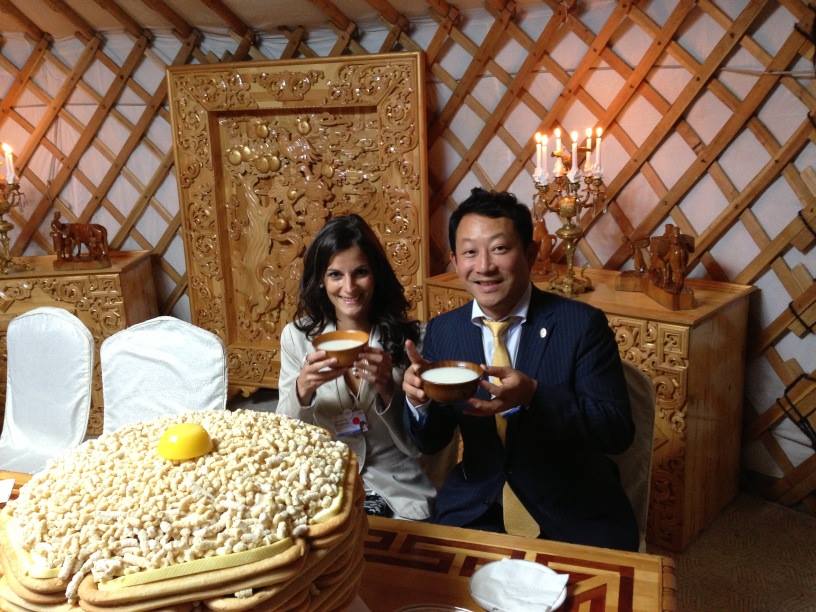
It was my last night in the capital city of Ulanbaataar (UB) during my first visit to Mongolia. I had spent an evening at a private reception generously hosted by the President of Mongolia, Elbegdorj Tsakhia, taking part in some of Mongolia’s older traditions — like trying my hand at the Mongolian bow and enjoying a bowl of fermented mare’s milk.

My visit also included a day at the stunning Terelj Resort in Mongolia’s National Park; strolling the semi-arid steppes of the country’s highlands; and checking out the breathtaking statue of Genghis Khan seated on horseback, the largest statue of its kind in the world. Overall, I had spent four days exploring the many faces of the country, engaging in discussions about the future of this most ancient nation.

The value of the country is indescribably vast, and for those who know it, the possibility for gainful success is great — if the country can move in the right direction over the next several decades.

With a population of three million people, Mongolia is currently one of the world’s fastest growing economies, with GDP growth for 2013 forecasted to be 14 and 16 percent (with a value of USD $10 billion) and a natural wealth valued at more than USD $3 trillion.

Landlocked between China and Russia, the country is benefiting from a booming mining industry, which is still far from realizing its full potential. To this effect, the government has strong ambitions to use this wealth to improve infrastructure and foster growth, ultimately improving the lives of its people.

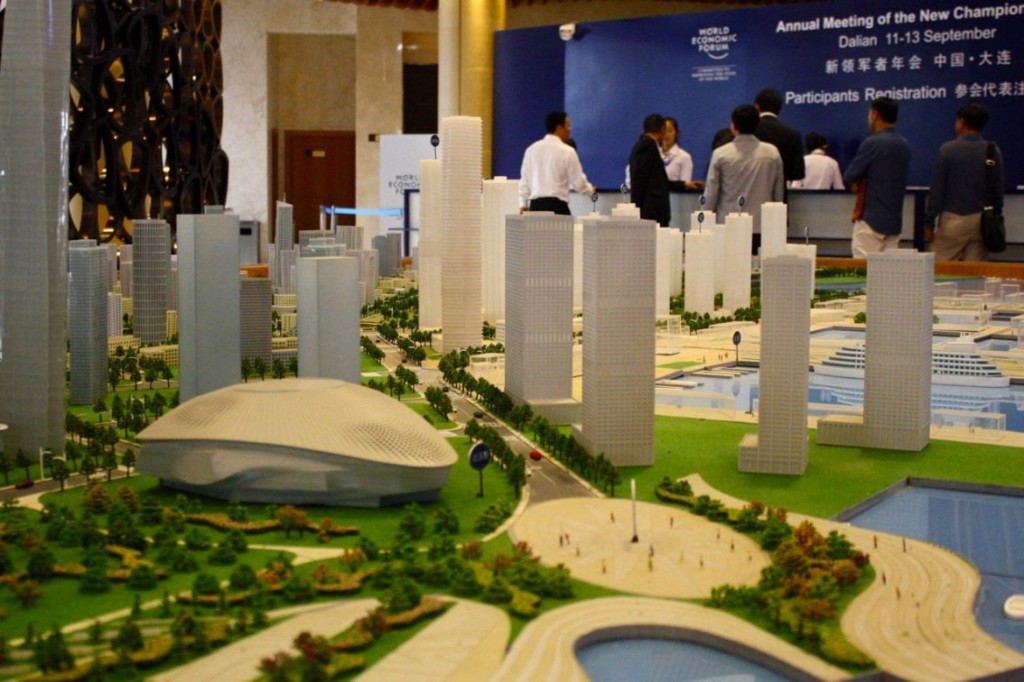
I had been invited to participate in the World Economic Forum’s Strategic Dialogue on the Future of Mongolia. This forum brought together 150 Mongolian government and other leading domestic and international stakeholders to develop a set of scenarios that explore the different ways in which Mongolia’s future might develop.

Read the full article on Huffington Post

admin-ajax.php-2

Professor Schwab to Shapers: Old Versus Young Mindsets Make the Difference

By | News | No Comments

The text below is an excerpt from the original article by Giovanna Mingarelli, published October 21, 2013 on Global Shapers.

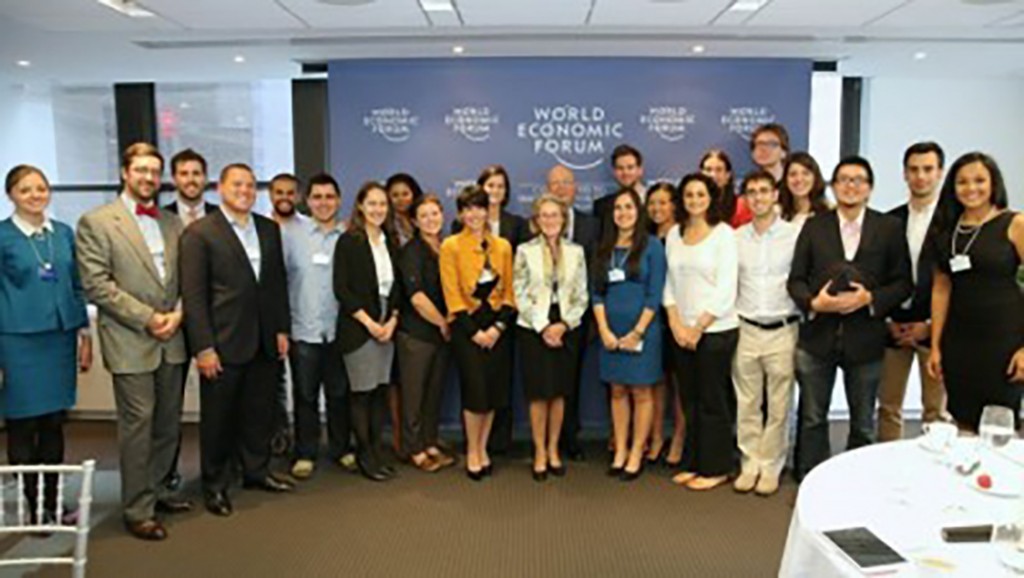
One beautiful fall morning in Manhattan a few weeks ago, 25 Global Shapers from 10 Hubs around the world came together at the World Economic Forum’s headquarters in New York City for a “Meet the Leader” lunch with Professor Klaus Schwab and Ms. Hilde Schwab.

From the [now two week old] Baltimore Hub to New York, Washington, Pittsburgh, San Juan, Montreal, Ottawa, Halifax, Moscow and Tokyo, we were surrounded by a group of fascinating Shapers who form part of the World Economic Forum’s 2,774 Shapers in 265 Hubs around the world.

I was fortunate to have been invited to facilitate the lunch.  With some veterans of the Global Shapers community, a sprinkle of bright new faces and everywhere in between, this group formed a superbly international and fabulous group all attempting, in some way, to make this world a little bit better.

Through their work these Shapers are all impacting the world around them. For instance, one New York Shaper spearheaded a Teens for Jeans initiative which now clothes two-thirds of all homeless children in America through her organization, while one Pittsburgh shaper is building cooking clubs in local high schools through his socially responsible restaurant. Further still, one Montreal Shaper is advising all the mayors in Quebec on how to plan their cities!

This was an impressive group indeed, and appropriately so, especially seeing the conversation over lunch was meant to cast a light on some of the most important topics and issues on the Global Agenda that are emerging in 2014.

Over the course of a few hours, we discussed issues ranging from crises in capitalism and democracy to the need for complete transparency in government, including a stronger use of social media. However, some of the points that had the longest lasting effect on me were not, frankly, so complex.

Read the full article on Global Shapers

cape-verde-320790_1280 copy

Are Love, Money and Glory Building Blocks to a Better World?

By | News | No Comments

The text below is an excerpt from the original article by Giovanna Mingarelli, published September 8, 2013 on The Huffington Post.

Albert Einstein was once asked by a journalist about his formula for success, and he said: “If A is success, I should say the formula is A = X + Y + Z, X being work, Y being play and Z is keeping your mouth shut.”

In her recent TEDTalk, “The Game That Can Give you 10 Extra Years of Life,” leading game designer Jane McGonical explores how playing games can not only improve the work we do, as Einstein realized in his own life, but can also be used as a key to greater longevity and overall personal happiness.

Across her body of literature, McGonical argues that all good gameplay is hard work. It’s hard work that we enjoy and choose for ourselves. And, based on the most recent scientific findings, when we do hard work that we love, we are priming our minds for happiness.

Satisfying work always starts with two things: a clear goal and actionable next steps toward achieving that goal. A great way to break down this work is by dividing our goal into bite-size, actionable items (these are also known as microtasks or microactions).

In fact, I know from first-hand experience that gamifying a process with microactions is not only fun and rewarding, but can also be incredibly useful.

In 2009, I was introduced to the fabulous Cindy Gallop, CEO and Founder of a radically simple web-meets-world online platform designed to transform intentions into action: IfWeRanTheWorld.

Madly in love with the concept from day one, I would become the number one “superhero” on the platform over the course of several years. I roped in my entire family, friends and personal contacts, and we used microactions to crowdsource everything from election campaigns to seeing beauty in everything.

Microacting, just as McGonical explains in her TEDTalk, makes me happy. Having a tool to use as an outlet to structure the activities I am already doing in my day-to-day life with the support of peers is great fun. It’s also incredibly versatile as there’s no limit to what you can do using microactions.

Read the full article on Huffington Post

2013-05-23-Giovanna-White-House

Shaping the Future of Civic Engagement at the White House

By | News | No Comments

The text below is an excerpt from the original article by Giovanna Mingarelli, published May 23, 2013 on The Huffington Post.

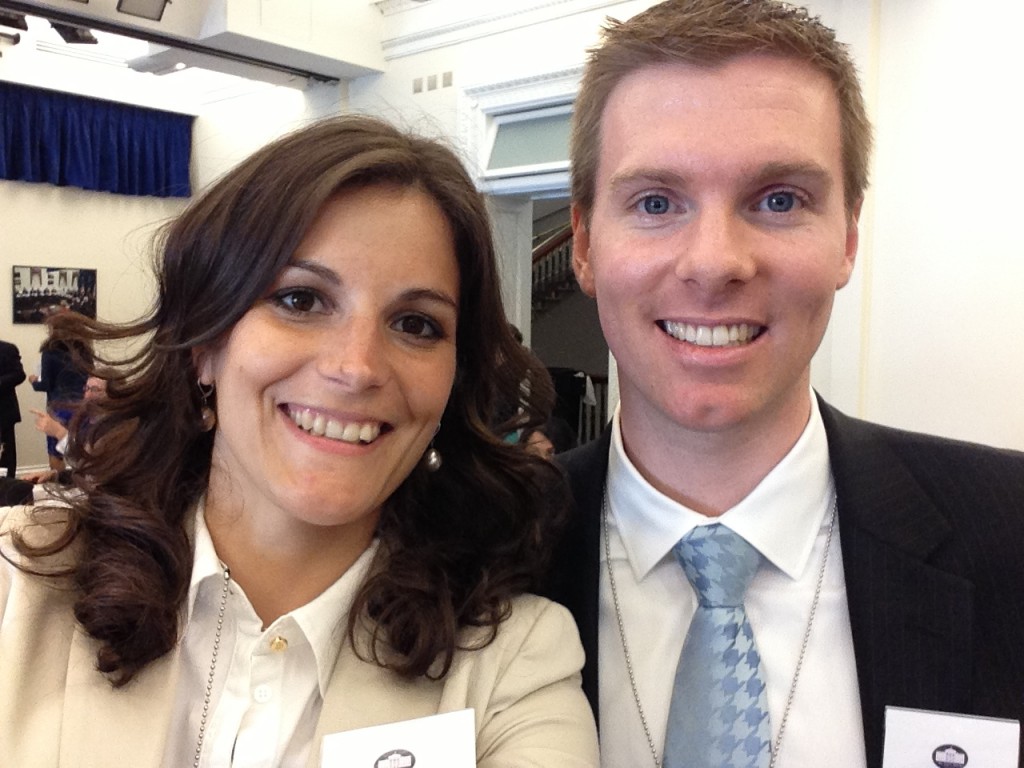
I was recently invited to attend a briefing on values and leadership at the White House in Washington, D.C. It was graciously convened by President Obama’s Office of Public Engagement and the D.C. Global Shapers.

A community of the World Economic Forum, the Global Shapers is an international network of over 200 city-based hubs developed and led by 1,500 promising leaders between the ages of 20 and 30 who use their entrepreneurialism to serve society.

Along with my fellow Canadian Shaper, Brian Kingston, and several dozen Global Shapers from around the world, we were honoured to take part in a series of “TED Talks” and workshops hosted and moderated by senior officials from the Office of the President.

During the course of our day, we grouped together by interest on issues such as health care, gun violence, employment, climate change, preventative disease, and education. In a breakout session focused on civic engagement with Shapers from Boston, Mass. and Charlotte, NC, we were challenged to identify a problem faced by the Milliennial Generation — those between 15 and 30 years of age — with respect to civic engagement. We were then asked to envision a tangible solution to that problem.

In his recent book: Cognitive Surplus: Creativity and Generosity in a Connected Age, New York University Digital Professor Clay Shirky contends there’s now more than one trillion hours of human intentions that go untapped every year.

What’s more, according to the CIA World Factbook, there are more than 1.7 billion Millennials on earth today, who, based on recent studies, are actually the most likely group in the 21st century to take action for each other, a cause or a government.

Read the full article on Huffington Post

benjamin-franklin-62846_1920

Microtasks: An Unlikely Legacy of Benjamin Franklin

By | News | No Comments

The text below is an excerpt from the original article by Giovanna Mingarelli, published March 12, 2013 on The Huffington Post.

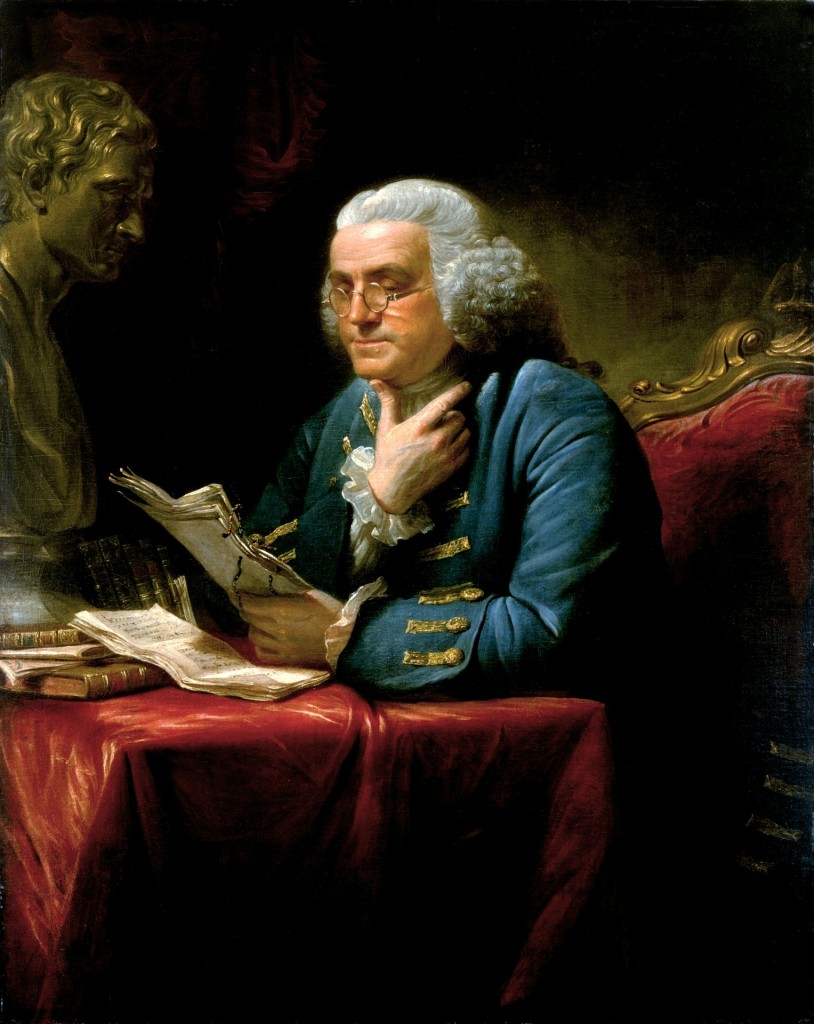
Many would agree that Benjamin Franklin (1706-1790) was a successful man. After all, in his life he did everything from discover that lightning is electricity to draft the American Declaration of Independence. He even invented bifocals.

What contributed to his great success in life?

In part, a fierce desire to achieve personal excellence tied together neatly in a practical, daily task-management system.

Beginning in his late twenties, Franklin created a step-by-step system to break down his main objective (in this case, excellence) into bite-size goals, or rather, microtasks. He then arranged each goal (mastering different virtues) by level of priority. He proceeded to focus on mastering each virtue one at a time, where he measured and reviewed his progress routinely, always aspiring to better himself.

Later on, an engineer and the father of modern day management consulting, F. W. Taylor (1856-1915), would revisit microtasking. This time, however, he would use it to create a system to scientifically manage the way people worked. He did this by breaking every action, job, or task into small and simple segments, which could be analyzed and taught.

To scientifically determine the best way to perform a job, Taylor performed what he called “time and motion studies.” Using a stopwatch, he would time a worker’s sequence of motions with the goal of determining the best way to perform a job. Taylor would then template the best sequences and have them reproduced for optimal results later on.

In both Franklin and Taylor’s cases, processes were broken down into microtasks which could be tracked and analyzed. With Franklin, this led to great personal success and with Taylor to critical improvements to economic and labour productivity.

The process of microtasking continues to this day, but its functions are much more diverse. Given the websites and applications that are emerging, microtasks can now form the foundation to incite millions of people to engage in a wide range of activities.

Read the full article on Huffington Post