All posts by M&C Consulting

cape-verde-320790_1280 copy

Are Love, Money and Glory Building Blocks to a Better World?

By | News | No Comments

The text below is an excerpt from the original article by Giovanna Mingarelli, published September 8, 2013 on The Huffington Post.

Albert Einstein was once asked by a journalist about his formula for success, and he said: “If A is success, I should say the formula is A = X + Y + Z, X being work, Y being play and Z is keeping your mouth shut.”

In her recent TEDTalk, “The Game That Can Give you 10 Extra Years of Life,” leading game designer Jane McGonical explores how playing games can not only improve the work we do, as Einstein realized in his own life, but can also be used as a key to greater longevity and overall personal happiness.

Across her body of literature, McGonical argues that all good gameplay is hard work. It’s hard work that we enjoy and choose for ourselves. And, based on the most recent scientific findings, when we do hard work that we love, we are priming our minds for happiness.

Satisfying work always starts with two things: a clear goal and actionable next steps toward achieving that goal. A great way to break down this work is by dividing our goal into bite-size, actionable items (these are also known as microtasks or microactions).

In fact, I know from first-hand experience that gamifying a process with microactions is not only fun and rewarding, but can also be incredibly useful.

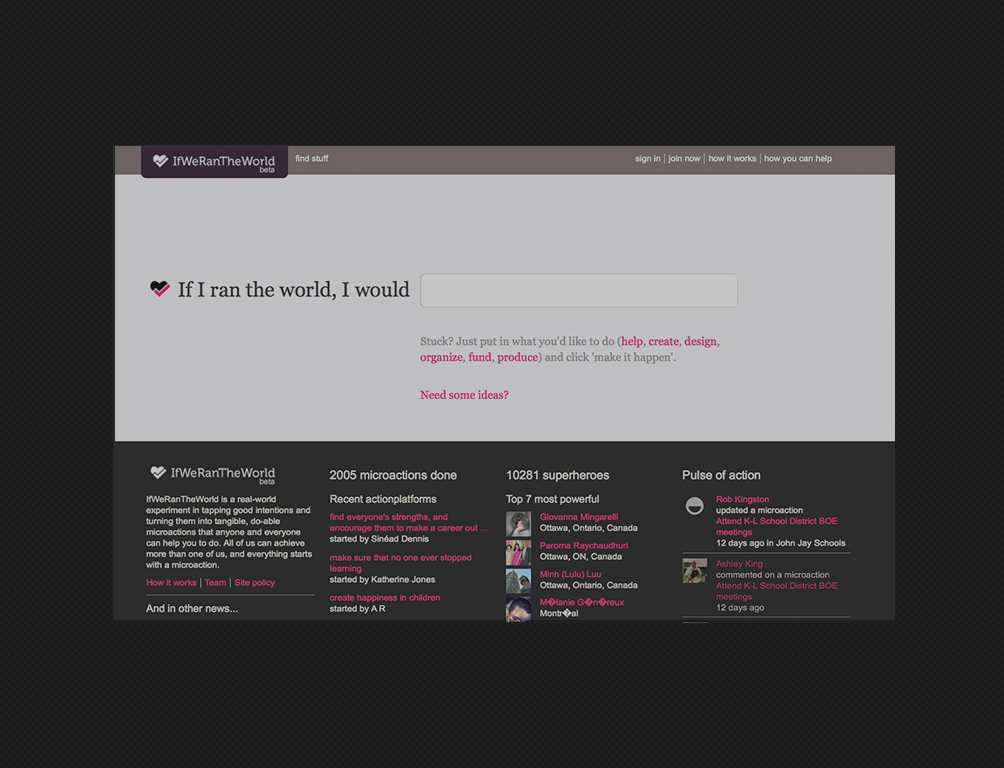
In 2009, I was introduced to the fabulous Cindy Gallop, CEO and Founder of a radically simple web-meets-world online platform designed to transform intentions into action: IfWeRanTheWorld.

Madly in love with the concept from day one, I would become the number one “superhero” on the platform over the course of several years. I roped in my entire family, friends and personal contacts, and we used microactions to crowdsource everything from election campaigns to seeing beauty in everything.

Microacting, just as McGonical explains in her TEDTalk, makes me happy. Having a tool to use as an outlet to structure the activities I am already doing in my day-to-day life with the support of peers is great fun. It’s also incredibly versatile as there’s no limit to what you can do using microactions.
Read the full article on Huffington Post

2013-05-23-Giovanna-White-House

Shaping the Future of Civic Engagement at the White House

By | News | No Comments

The text below is an excerpt from the original article by Giovanna Mingarelli, published May 23, 2013 on The Huffington Post.

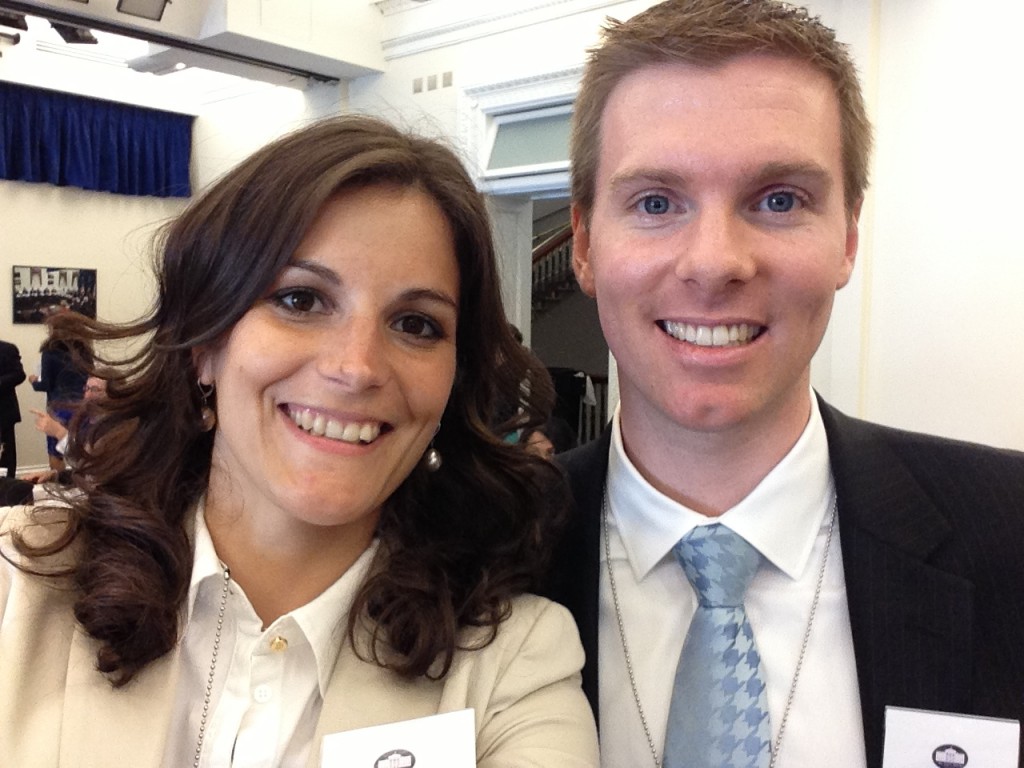
I was recently invited to attend a briefing on values and leadership at the White House in Washington, D.C. It was graciously convened by President Obama’s Office of Public Engagement and the D.C. Global Shapers.

A community of the World Economic Forum, the Global Shapers is an international network of over 200 city-based hubs developed and led by 1,500 promising leaders between the ages of 20 and 30 who use their entrepreneurialism to serve society.

Along with my fellow Canadian Shaper, Brian Kingston, and several dozen Global Shapers from around the world, we were honoured to take part in a series of “TED Talks” and workshops hosted and moderated by senior officials from the Office of the President.

During the course of our day, we grouped together by interest on issues such as health care, gun violence, employment, climate change, preventative disease, and education. In a breakout session focused on civic engagement with Shapers from Boston, Mass. and Charlotte, NC, we were challenged to identify a problem faced by the Milliennial Generation — those between 15 and 30 years of age — with respect to civic engagement. We were then asked to envision a tangible solution to that problem.

In his recent book: Cognitive Surplus: Creativity and Generosity in a Connected Age, New York University Digital Professor Clay Shirky contends there’s now more than one trillion hours of human intentions that go untapped every year.

What’s more, according to the CIA World Factbook, there are more than 1.7 billion Millennials on earth today, who, based on recent studies, are actually the most likely group in the 21st century to take action for each other, a cause or a government.

Read the full article on Huffington Post

benjamin-franklin-62846_1920

Microtasks: An Unlikely Legacy of Benjamin Franklin

By | News | No Comments

The text below is an excerpt from the original article by Giovanna Mingarelli, published March 12, 2013 on The Huffington Post.

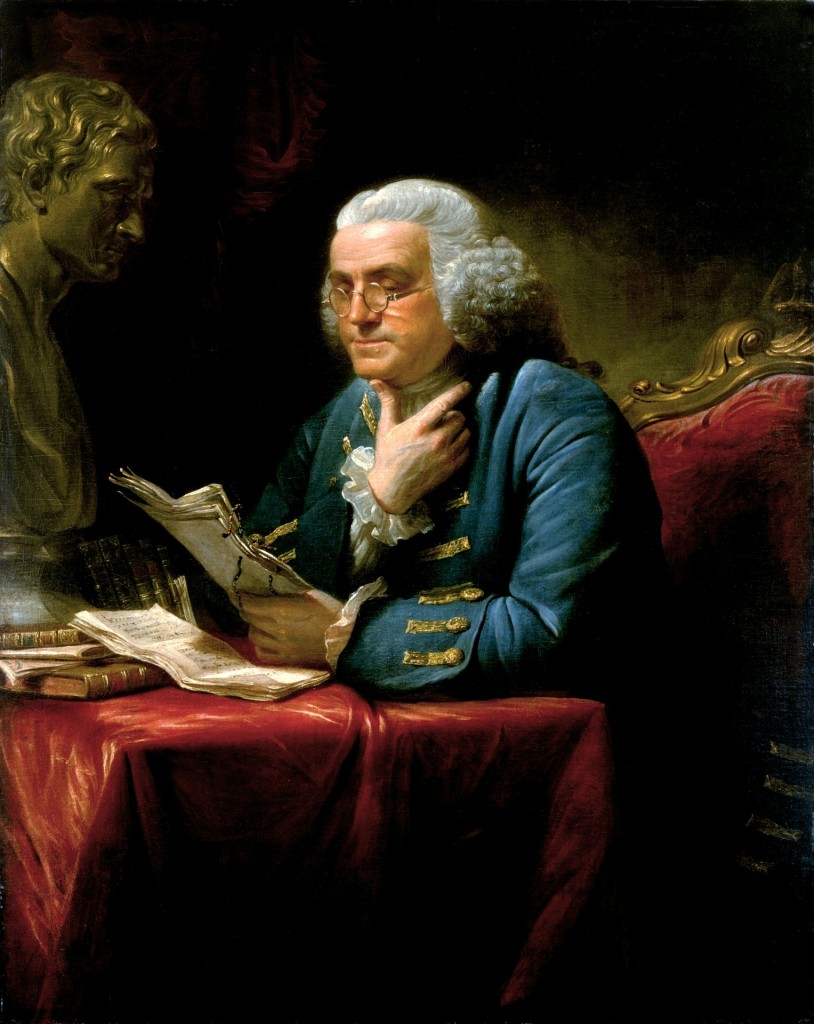
Many would agree that Benjamin Franklin (1706-1790) was a successful man. After all, in his life he did everything from discover that lightning is electricity to draft the American Declaration of Independence. He even invented bifocals.

What contributed to his great success in life?

In part, a fierce desire to achieve personal excellence tied together neatly in a practical, daily task-management system.

Beginning in his late twenties, Franklin created a step-by-step system to break down his main objective (in this case, excellence) into bite-size goals, or rather, microtasks. He then arranged each goal (mastering different virtues) by level of priority. He proceeded to focus on mastering each virtue one at a time, where he measured and reviewed his progress routinely, always aspiring to better himself.

Later on, an engineer and the father of modern day management consulting, F. W. Taylor (1856-1915), would revisit microtasking. This time, however, he would use it to create a system to scientifically manage the way people worked. He did this by breaking every action, job, or task into small and simple segments, which could be analyzed and taught.

To scientifically determine the best way to perform a job, Taylor performed what he called “time and motion studies.” Using a stopwatch, he would time a worker’s sequence of motions with the goal of determining the best way to perform a job. Taylor would then template the best sequences and have them reproduced for optimal results later on.

In both Franklin and Taylor’s cases, processes were broken down into microtasks which could be tracked and analyzed. With Franklin, this led to great personal success and with Taylor to critical improvements to economic and labour productivity.

The process of microtasking continues to this day, but its functions are much more diverse. Given the websites and applications that are emerging, microtasks can now form the foundation to incite millions of people to engage in a wide range of activities.

Read the full article on Huffington Post


2013-03-04-Huffington-DOS-Games

How Games Shape Our World

By | News | No Comments

The text below is an excerpt from the original article by Giovanna Mingarelli, published March 4, 2013 on The Huffington Post.

Do you remember playing DOS games like Pong or Hangman? How about the original Wolfenstein 3D on floppy disk?

I do.

My father, a long-time mathematician, started bringing home computers in the late 1980s. I would have been three or four years old and I had no idea at the time the effect that the 1987 IBM PC XT sitting in my family living room would later have on my life. What was my first use of one of the 21st century’s most revolutionary inventions?

Playing games, of course.

I started off with simple stuff like Jump Man: a game created by the now defunct game developer company, Epyx Inc. The point of the game was to diffuse bombs by touching them, where you’d get points for each one you diffused. It was mindless, easy… and kind of fun. Looking back, this was probably my first exposure to operating in a game built around what the current gaming industry refers to as “compulsion loops” — this is a construct which refers to the process of structuring people’s behavior so as to cyclically expect rewards for effort. I.e. run, diffuse bomb, climb latter, get reward, repeat. This construct underpins the architecture of many a game to this day — it’s what keeps the player coming back for more.

According to the Director of Game Research and Development at the Institute for the Future, Jane McGonigal, there are now over three billion hours per week of ongoing gaming around the world — with numbers expected to triple in the next three years. What’s more, 97 percent of youth in the United States now play computer and video games, with most gamers expecting to continue playing games for the rest of their lives.

With billions of hours spent playing them, and built-in patterns designed to keep people hooked, will games have a positive or negative influence on the world? I think it all depends on what kinds of games we choose to play.

Read the full article on Huffington Post

Kony, Government and Crowdsourcing

By | News | No Comments

The text below is an excerpt from the original article by Giovanna Mingarelli, published March 28, 2012 on World Economic Forum Blog.

People around the world have been empowered by social media to take action on the issues they care about

This was made clear by the Arab Spring last year, the ongoing Occupy movement and, most recently, the Kony 2012 campaign. At the heart of the campaign is a 30 minute film created by Invisible Children, Inc., aimed at making indicted Ugandan war criminal, Joseph Kony, famous in order to have to him arrested for the horrific enslavement, abuse and killing of children in Africa over the course of several decades.

These bottom-up social movements have all challenged traditional top-down government structures in their own right. In fact, some might argue the traditional top-down leadership model, once so fitting for governments around the world, has been flipped on its head.

Reflecting on this global trend, the World Economic Forum’s report, Outlook on the Global Agenda 2012, explores the need for governance frameworks to include both informal structures of power and influence, along with traditional formal structures of government, moving forward.

This observation has been driven home by Invisible Children’s director, Jason Russell, who has shown that crowdsourced action through informal social networks can drive meaningful and transformative movements across geographic and political boundaries, given the right cause.

The Kony 2012 video is now the most successful viral video of all time with more than 100 million views – an impressive feat for a 30 minute piece. It has placed widespread and protracted public pressure on governments and institutions, including the United States and the African Union, to respond to their plight. And it has worked. Action is now being taken, by both governing bodies, to capture the fugitive warlord because of this movement.

Read the full article on World Economic Forum


2012-02-20-Hill-Times-Crowdsource

It’s Time to Crowdsource Through Open Innovation

By | News | No Comments

The text below is an excerpt from the original article by Giovanna Mingarelli, published February 20th, 2012 on The Hill Times.

The main idea behind the open innovation business model is that in a world of easily-accessible and widely-distributed knowledge, many companies can no longer afford to rely exclusively on their own research. Instead, they should be encouraged to buy or license inventions or technology from other companies.

Read the full article on Hill Times

admin-ajax.php-4

New Young Leaders Emerge from Davos

By | News | No Comments

The text below is an excerpt from the original article by Giovanna Mingarelli, published February 1, 2012 on The Globe and Mail.

A powerful new force of self-empowered change was introduced at this year’s World Economic Forum in Davos, Switzerland: the Global Shapers Community.

It’s composed of more than 600 young entrepreneurs from around the world, 70 of whom were invited to attend the conference. I was fortunate to be one of three Canadians on the list.

Global Shapers are between the ages of 20 and 30 – the millennial generation – and they have the passion, dynamism and entrepreneurial spirit to shape the future. More than 50 per cent of the world’s population is under the age of 27, so there’s no better group to voice how best to improve the state of the planet.

The theme for this year’s conference was The Great Transformation: Shaping New Models. Global Shapers were invited to participate in every pillar, ranging from new models of leadership to society and technology. I was chosen because of my background as an entrepreneur who has been using new technology – crowdsourcing – to take action on meaningful issues.

Throughout the week of Jan. 25, I helped lead several workshops and roundtables, ranging from how consumers become innovators, to climate change. In both cases, the trend was clear: crowdsourcing has become a force to be reckoned with.

The concept dates back to ancient Rome, where the emperor of the day would elicit a response from a crowd in an open forum by asking for calls in favour of or against an issue.

Read the full article on Globe and Mail

writing-923882_1920

Harvard Business School Case Study, “IfWeRanTheWorld”

By | News | No Comments

Giovanna Mingarelli interviewed for her use of action branding in the Harvard Business School Case Study, “If We Ran The World” on March 2011.

Cindy Gallop launched IfWeRanTheWorld (IWRTW) in February 2010, as what the tech world called minimum viable product, in order to real-world test Gallop’s “business of the future” concept while development was ongoing. IWRTW was conceived to bring together human good intentions with corporate good intentions, to activate both into shared action, against shared goals, to deliver shared and mutually accountable results. She wanted to make “doing good as sexy as hell” for both individuals and businesses, to make it quicker, easier, and simpler to turn intention into action, one “microaction” at a time. In January 2011, Gallop’s key challenge was how to amplify the IWRTW experience in a way that would make it a more valuable-and immediately understandable-business proposition to a brand. The idea behind the venture was only as good as its business model and its execution.

Get If We Ran The World on Harvard Business Review

ifweran_screen2

If She Ran The World She Would…

By | News | No Comments

The text below is an excerpt from the original article by Jon Pincus about Giovanna Mingarelli, published September 11, 2010 on Tales from the Net.

IfWeRanTheWorld CEO Cindy Gallop describes it as “a radically simple web platform designed to turn good intentions into action, one microaction at a time”.  Giovanna’s intention here is straightforward: write a short story. As anybody who’s ever tried to write can tell you, though, that’s easier said than done. Using IWRTW, Giovanna’s defined an ‘action platform’ with the steps to accomplish her goal.

Right now Giovanna’s got 10 microactions ‘in play’ and 36 done. “If We Ran The World allows me to express my intentions in a meaningful and quantifiable way”, Giovanna told me. “I love this platform.”

IWRTW is very social in terms of being designed for people working together (you can target microactions as invitations to act and pick up somebody else’s microactions) so Giovanna’s action platform also invites others to help her if they’re interested. The site’s business model is to work with businesses that want to put together an action platform designed to do good and make money simultaneously, and is still in beta. So far the reviews are positive. Bruce Mau Design’s blog summed it up: “Beautiful design + social engagement + fun to use = awesome!”

Giovanna and I met in a very social network-y way. Tara Hunt (aka @missrogue) tweeted a link to my blog post Guys talking to guys who talk about guys. Cindy saw it, left a comment, and we connected via Twitter and Facebook and Skype. I was immediately struck by IWRTW’s colors and inviting user experience, so different from everything I see out there.

Cindy calls it “emotional software” and the first thing I thought of was work that Karen Fries and Tim Skelly did in the 1990s on Seductive interfaces.  When I asked how people were using the site she knew just who I should talk to.

Read the full article on Tales from the Net